


 $687.50 AUD
 $456.80 AUD
$572.90 AUD
$456.80 AUD
$572.90 AUD $399.00 AUD
 $649.00 AUD
$699.00 AUD
$649.00 AUD
$699.00 AUD $149.00 AUD
$199.00 AUD
$149.00 AUD
$199.00 AUDA DI box does two things at once. It converts a high-impedance, unbalanced instrument signal into a low-impedance, balanced one that can run down a long cable without picking up noise — and it isolates the instrument from the mixing desk, which is what stops the hum you get when a guitar amp and a PA are on different circuits.
Without one, a bass plugged straight into a 30-metre snake arrives thin, noisy and hum-ridden. With one, it arrives clean. That is the entire job, and it is why every live rig and most studios have several.
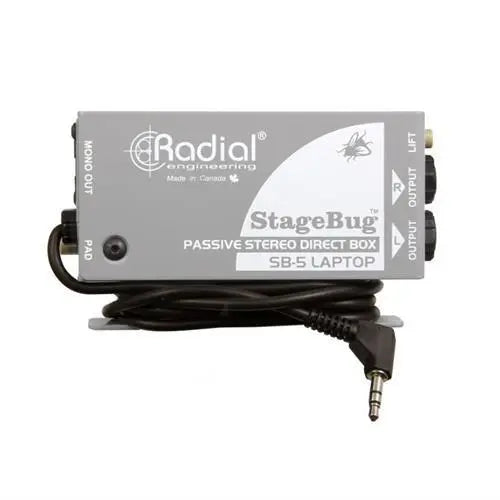
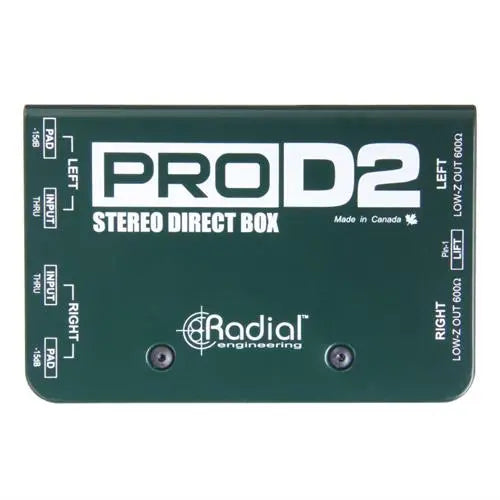
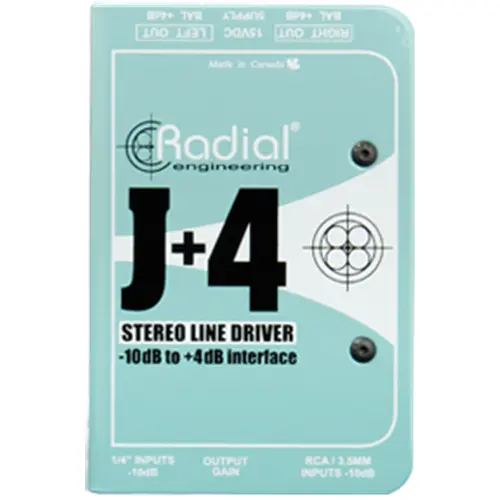
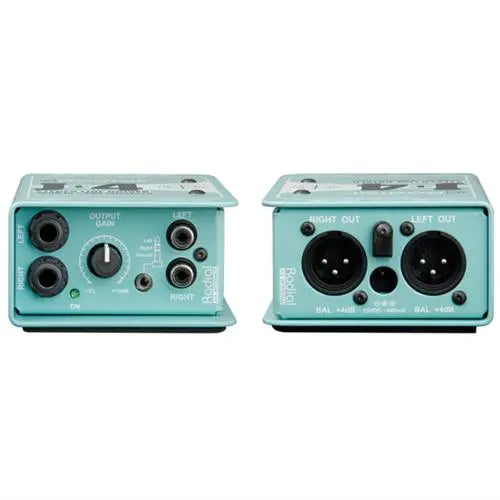
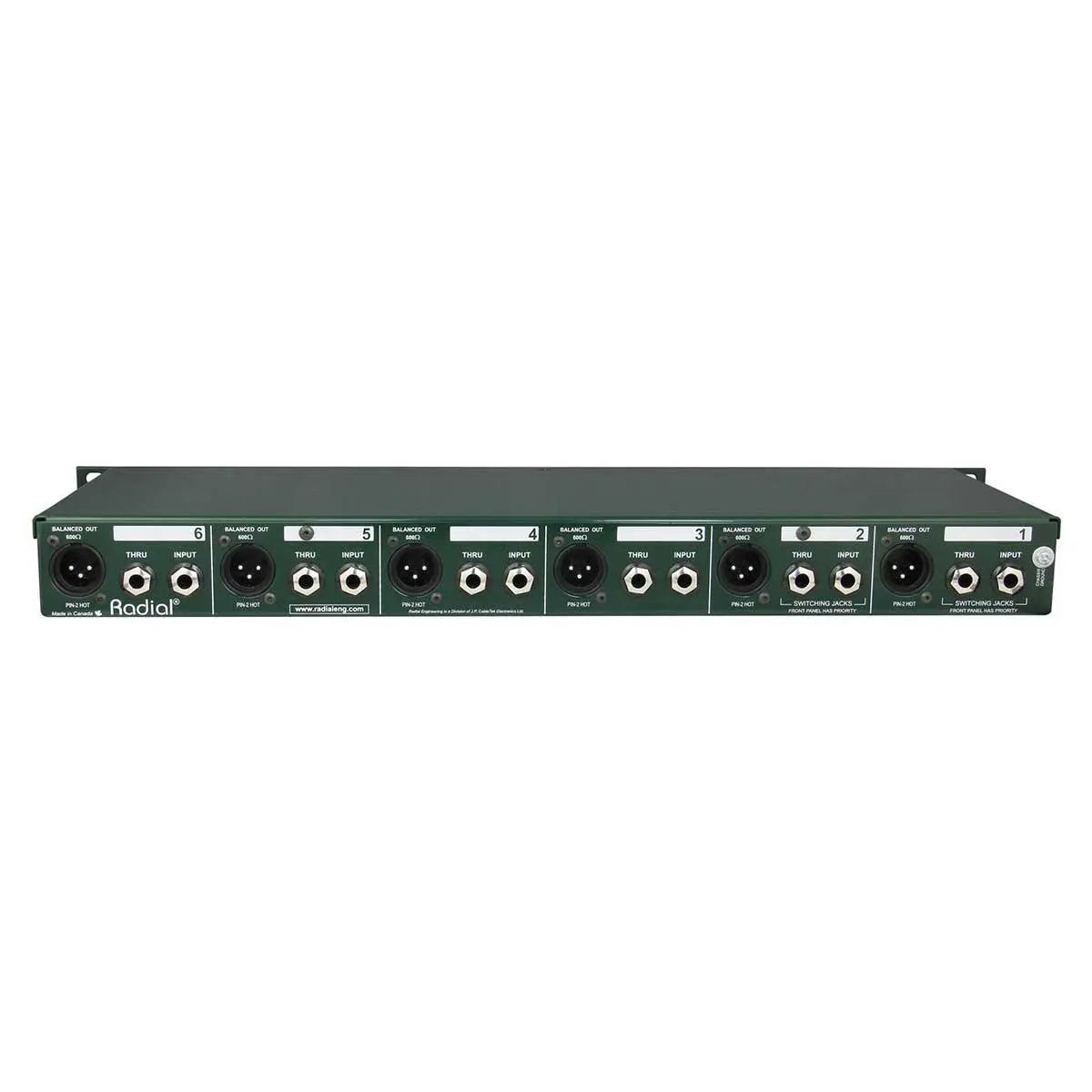
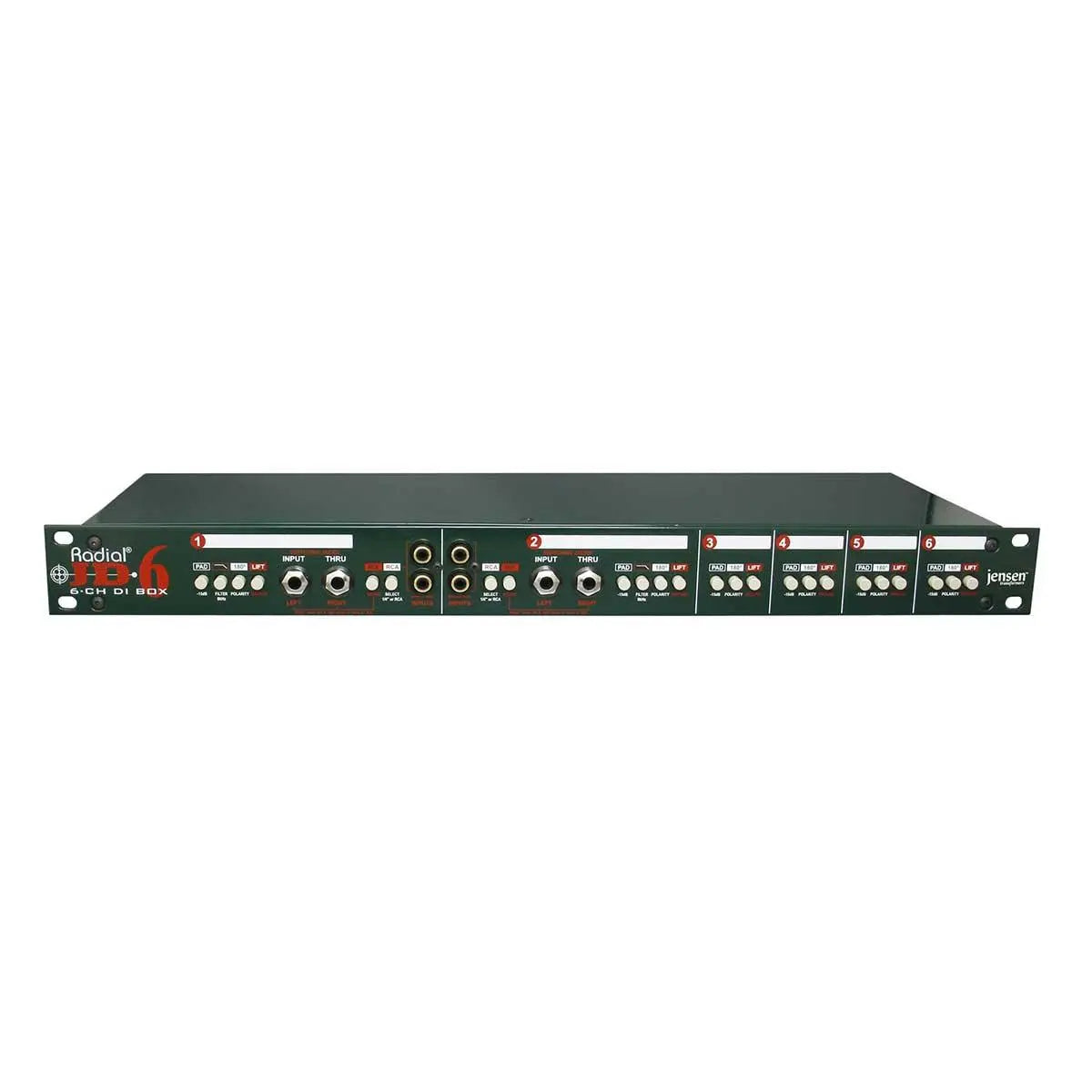
We stock DI boxes from Radial Engineering — the brand most engineers reach for by default — from around $145 for a passive isolator to $3,727 for a full guitar interface system. Everything ships Australia-wide.
The question that decides most purchases, and it comes down to what you are plugging in.
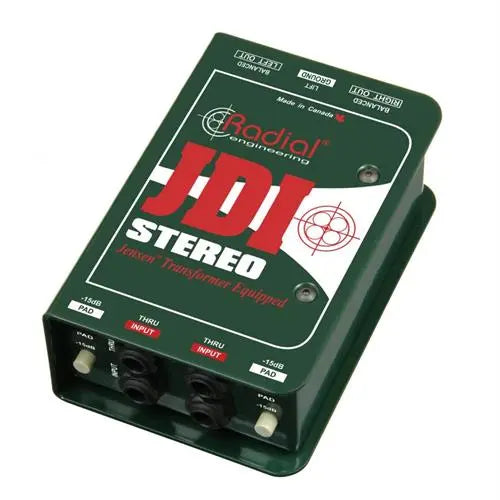
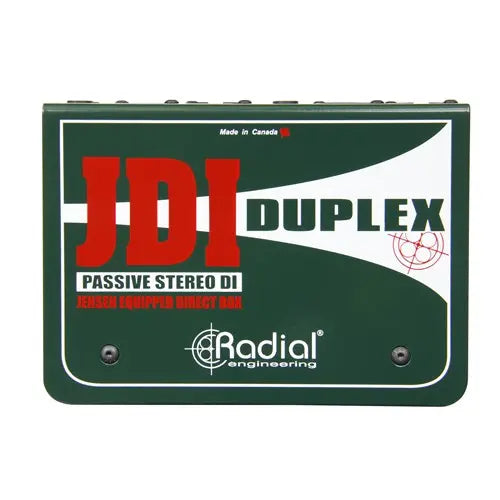
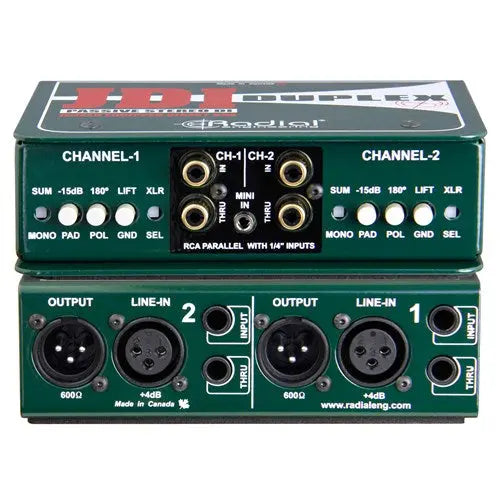
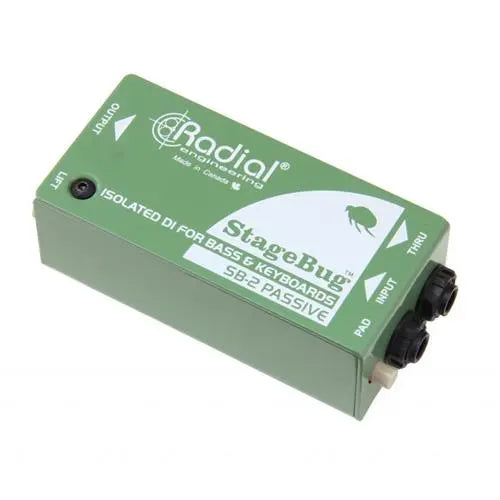
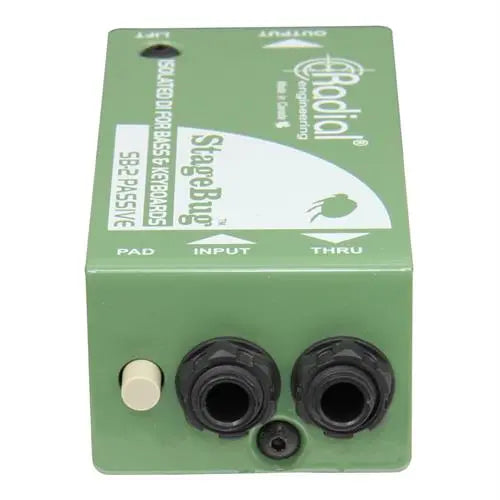
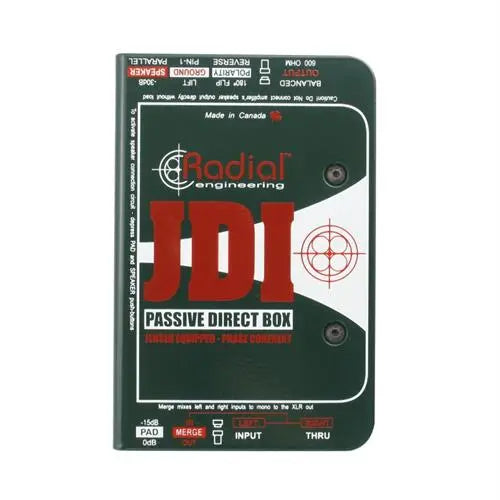
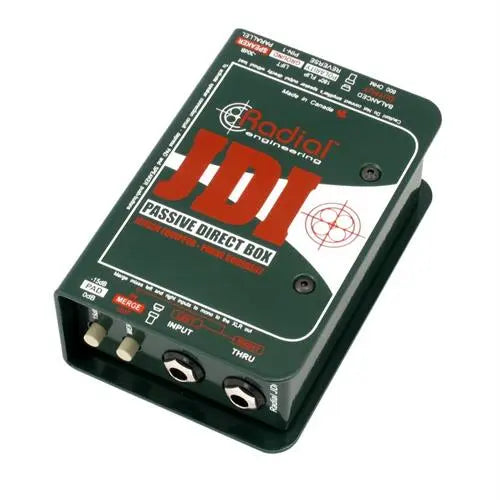
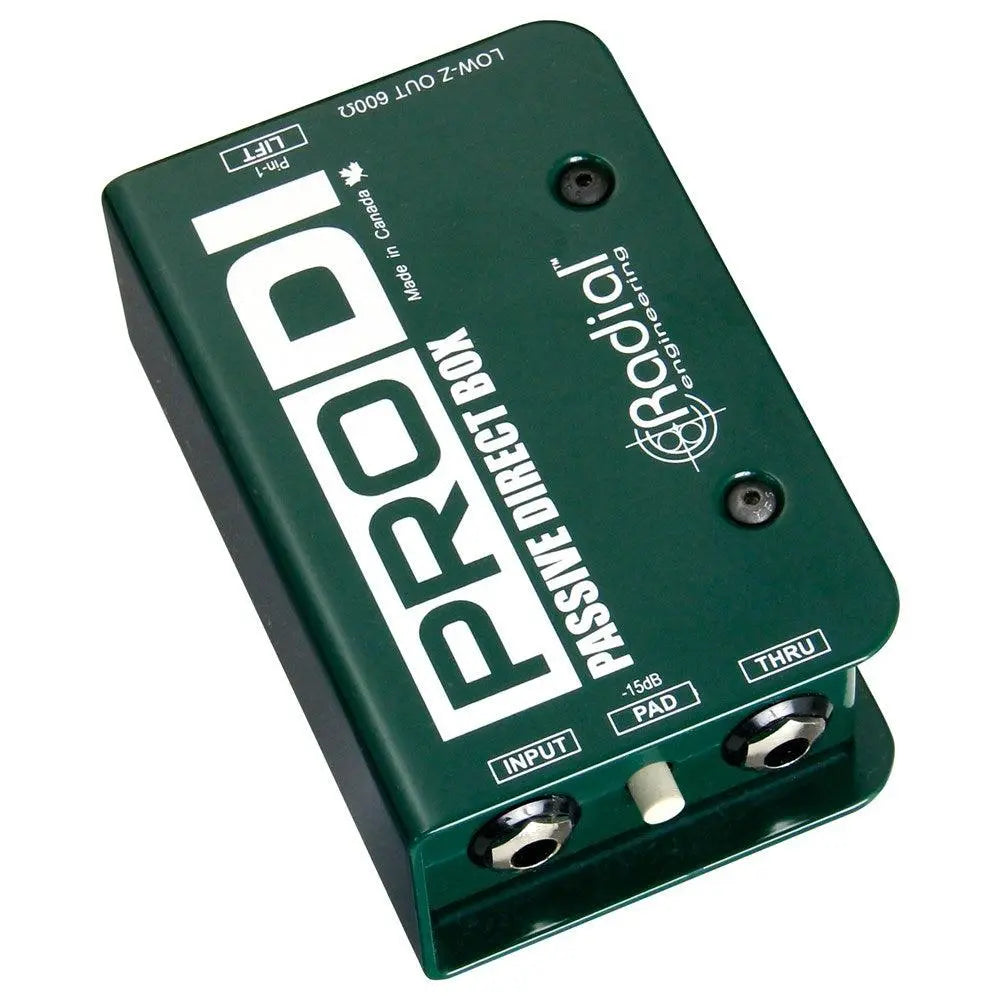
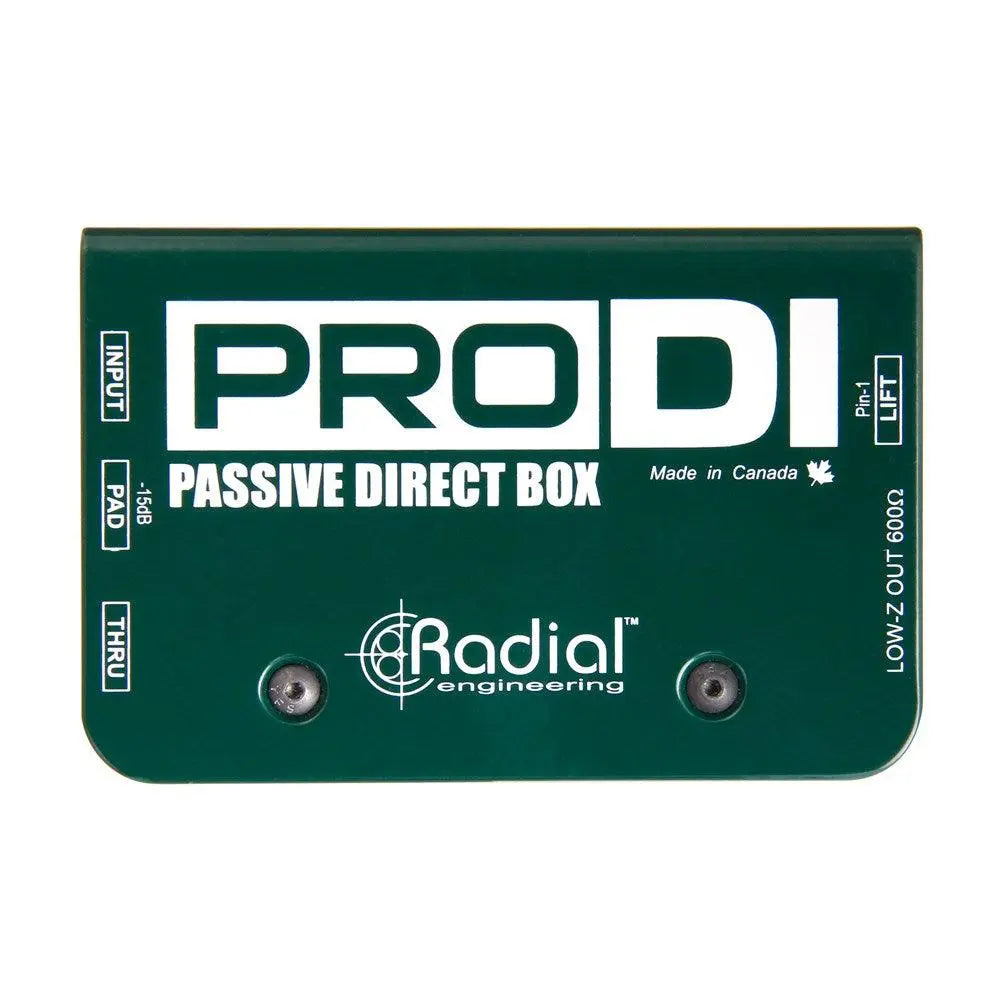
Passive DI boxes use a transformer and need no power. They handle very hot signals without distorting, which makes them the right choice for anything with its own preamp or a high output — active bass guitars, keyboards, synths, drum machines, and amplifier speaker outputs. They are also indestructible, which matters on a touring rig. The Radial JDI is the reference in this category.
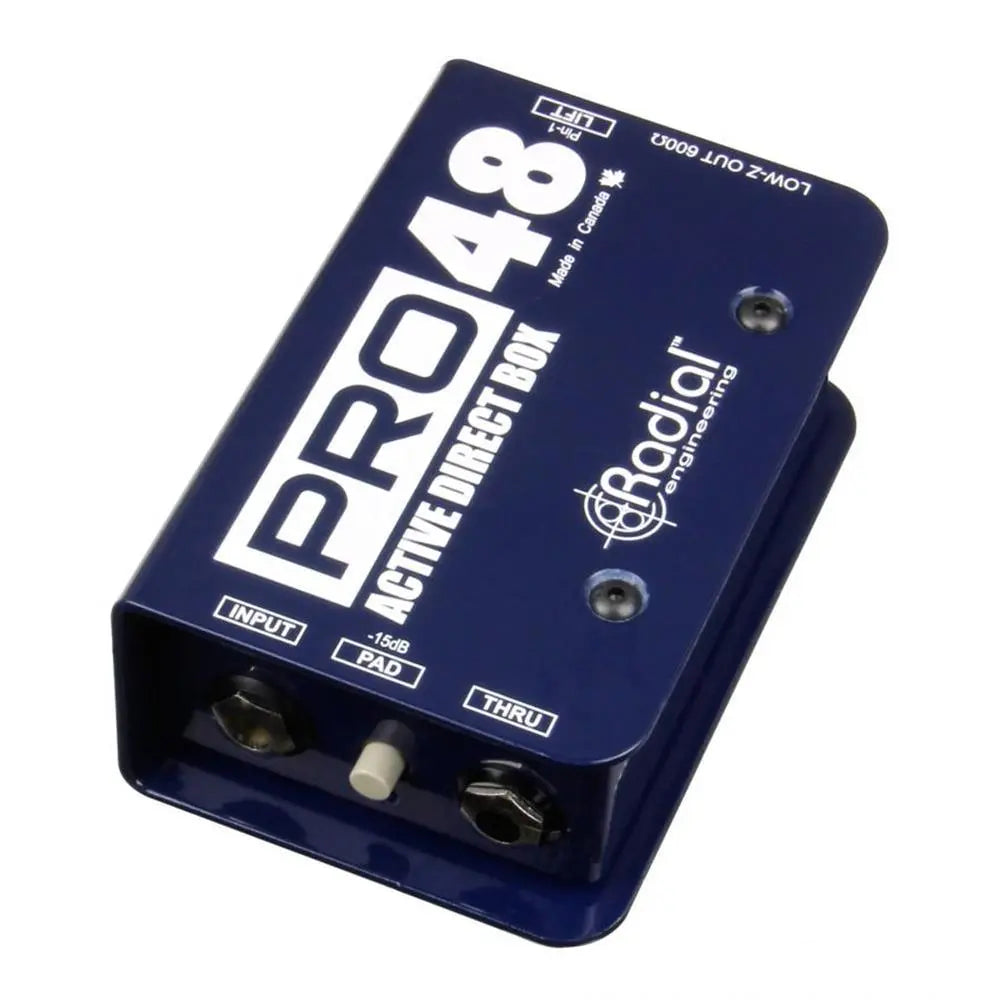
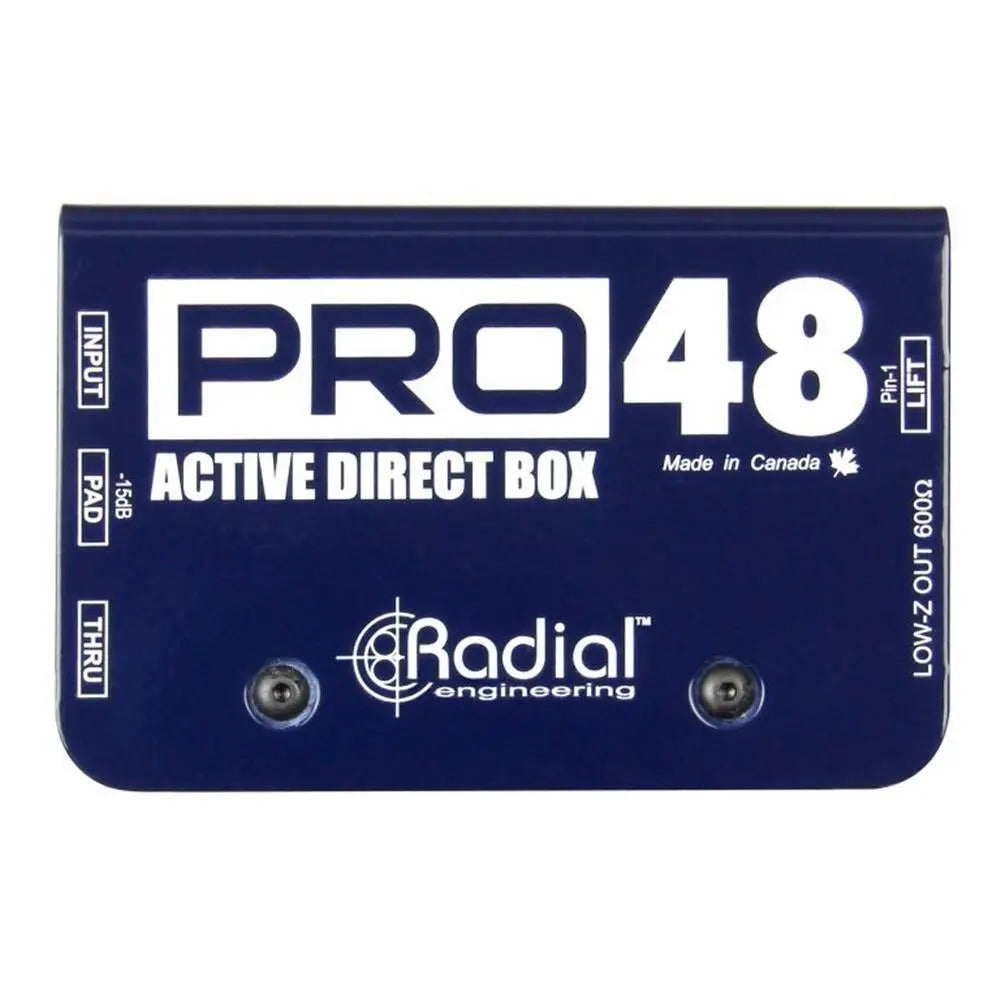
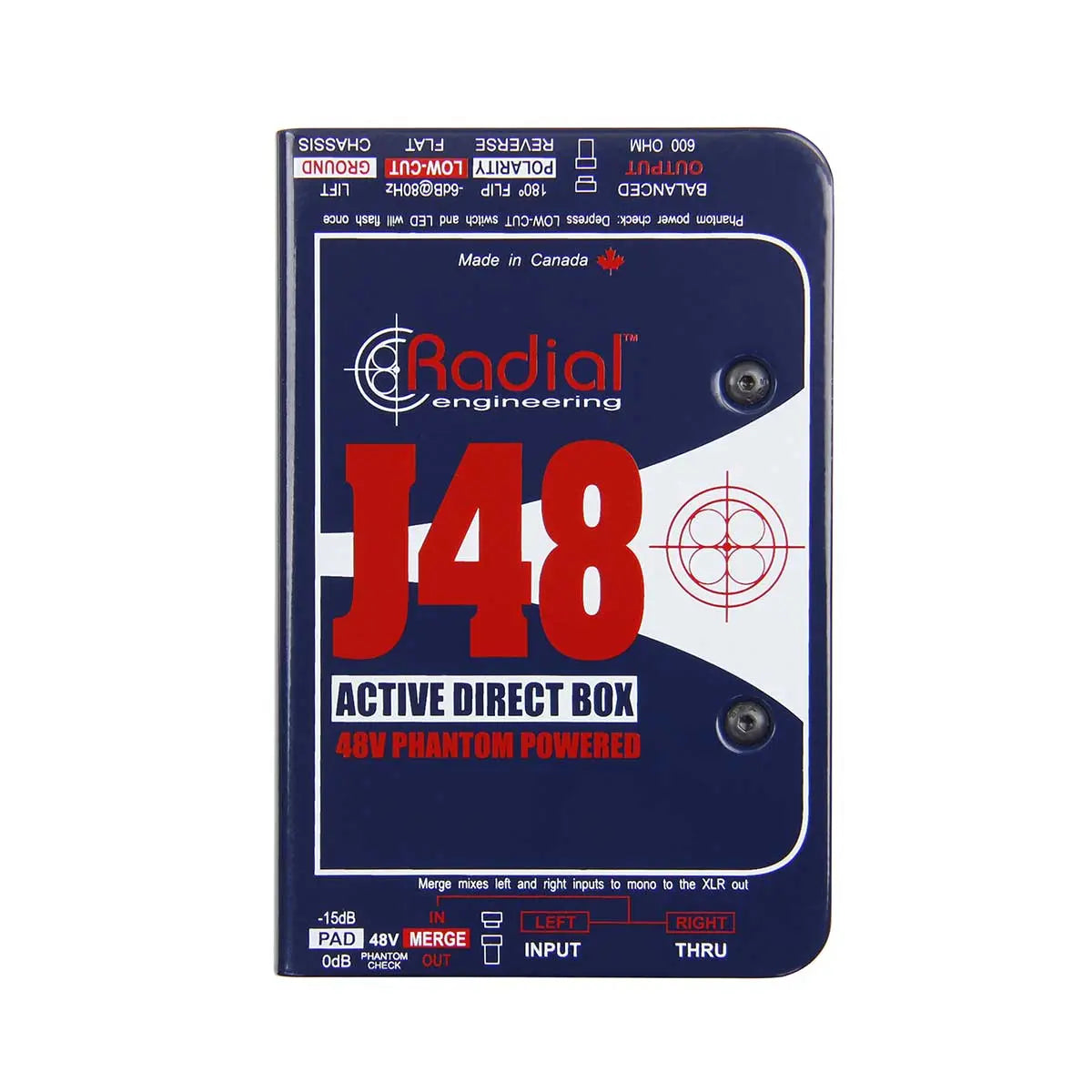
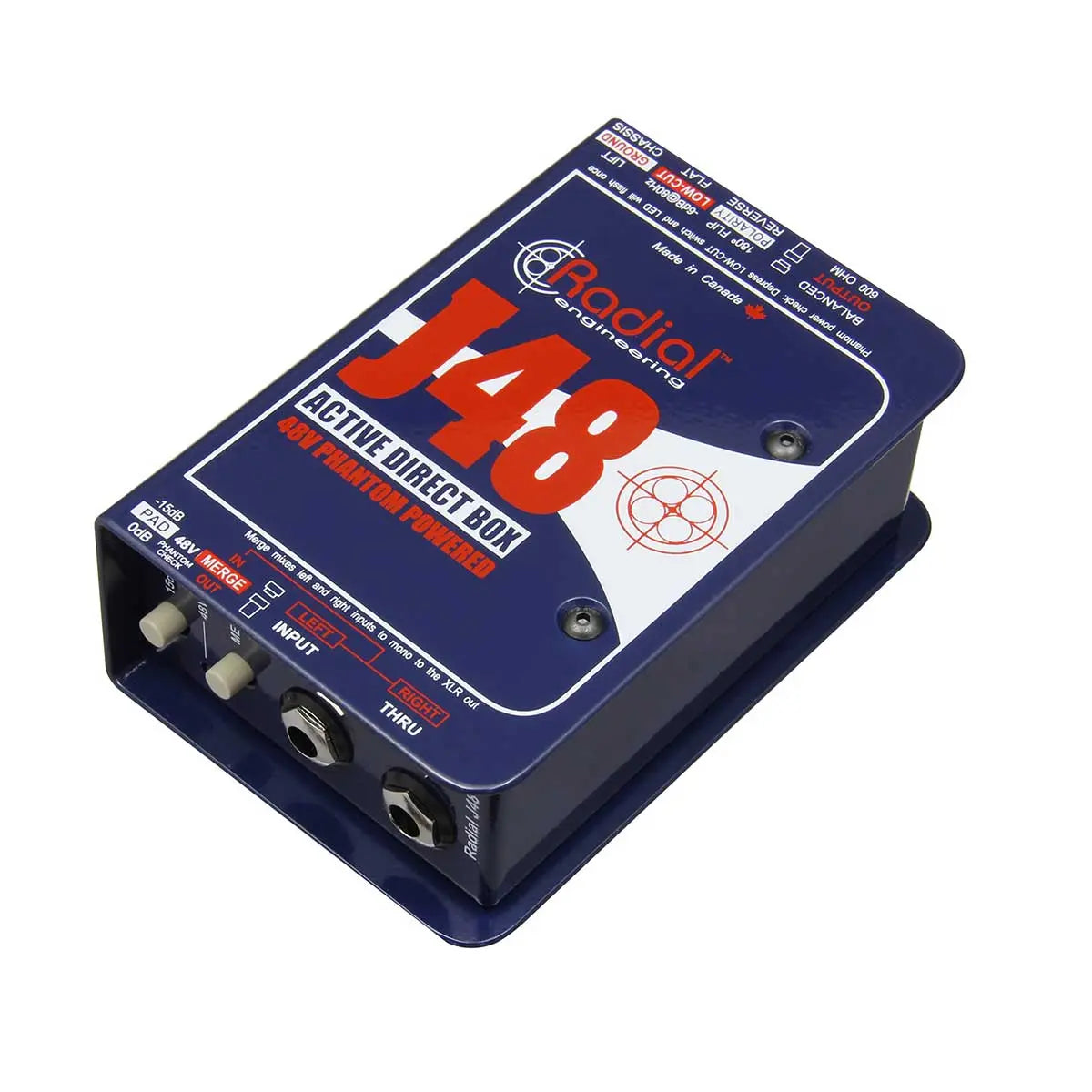
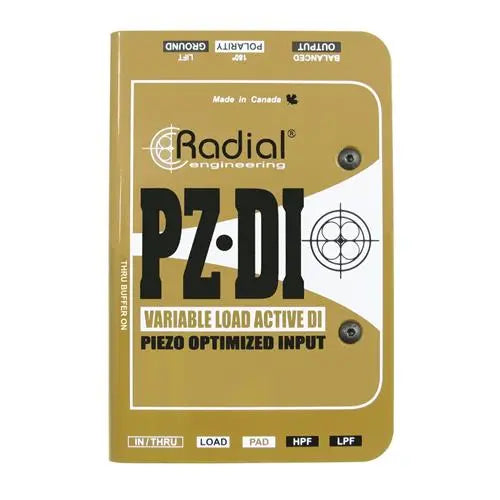
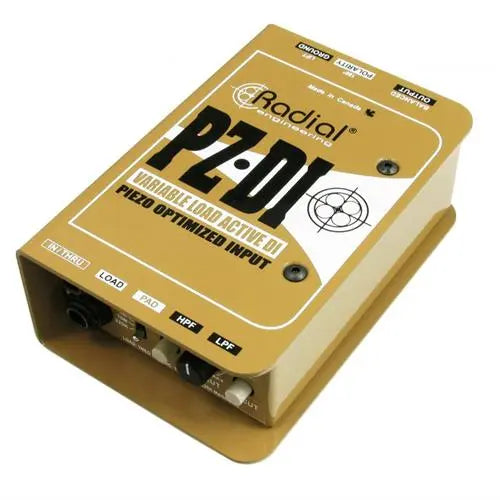
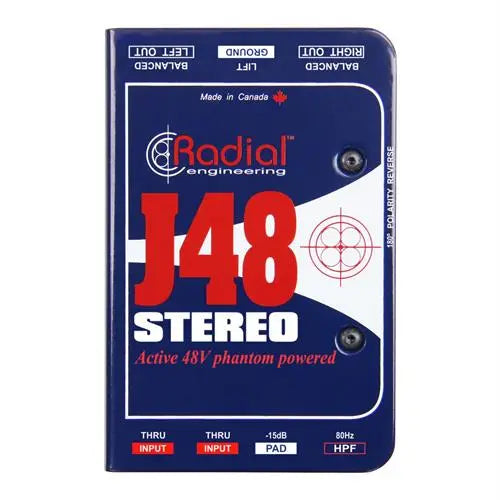
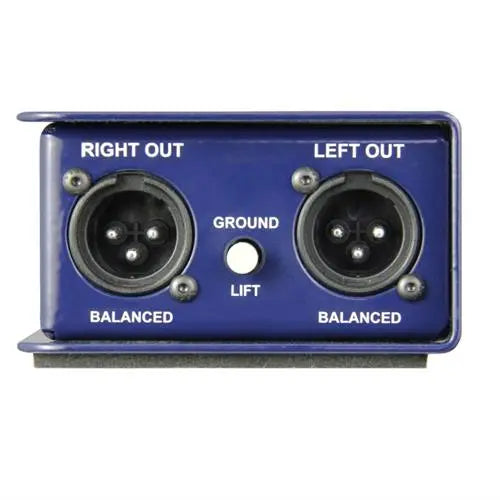
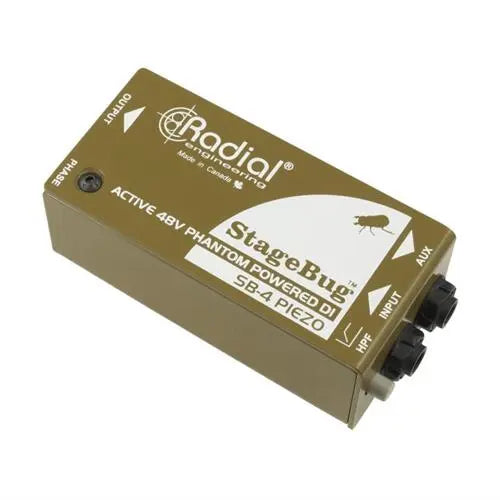
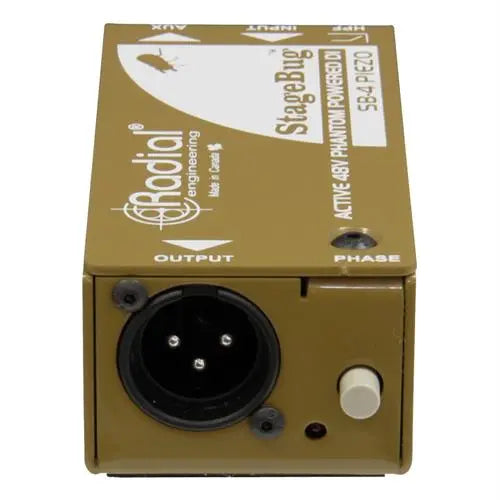
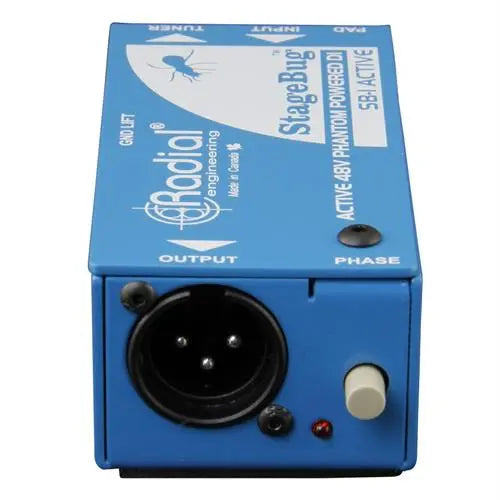
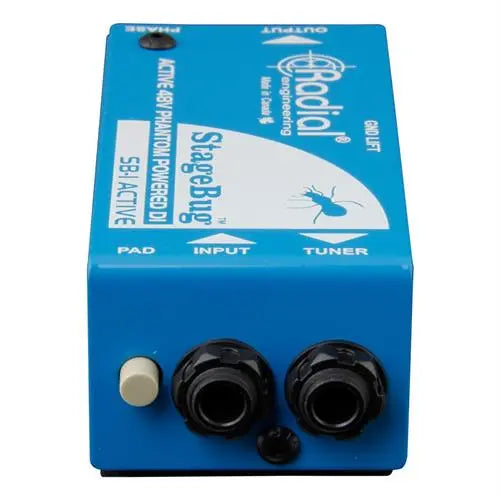
Active DI boxes contain a preamp and need power, either 48V phantom from the desk or a battery. The high input impedance suits weak, high-impedance sources — passive electric guitars and passive basses especially, and acoustic instruments with piezo pickups. Feed a passive DI from a passive guitar pickup and the top end dulls; an active DI keeps it. The Radial PRO48 and J48 sit here.
The practical rule: passive pickup, active DI. Active pickup or line-level source, passive DI. If you only own one and it has to cover everything, an active DI is the more forgiving choice.
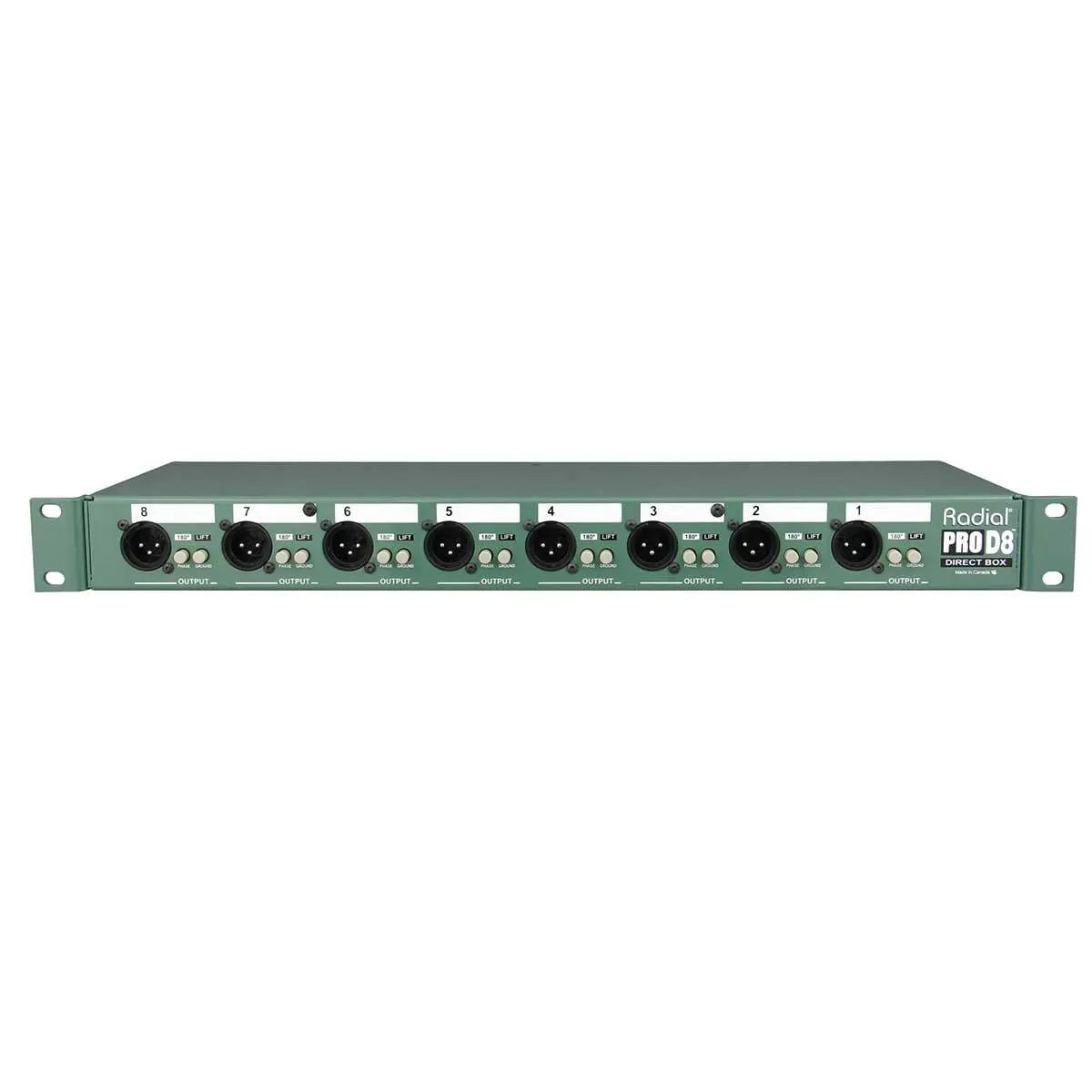
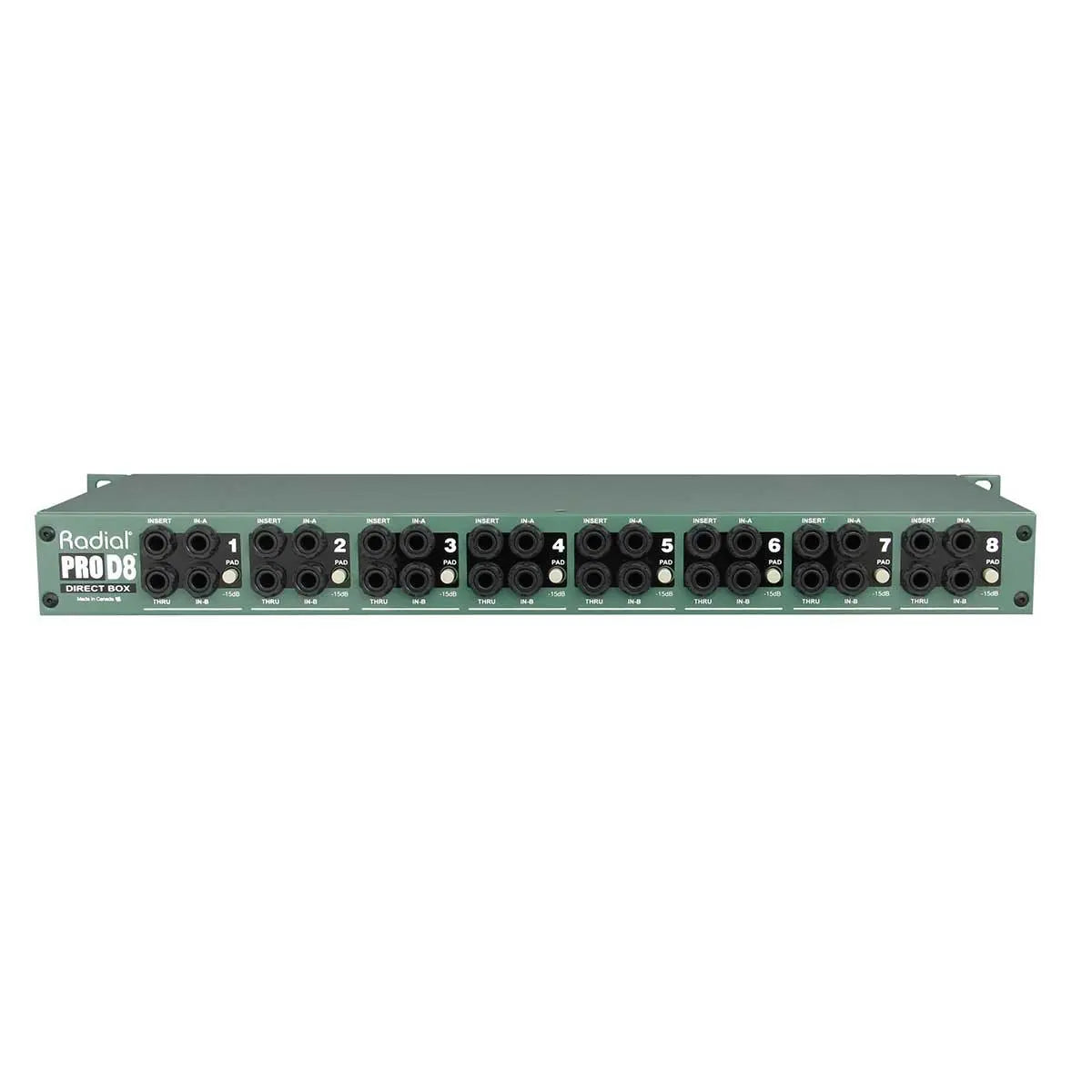
Radial's range extends well past the standard box, and most of these solve a specific recurring problem:
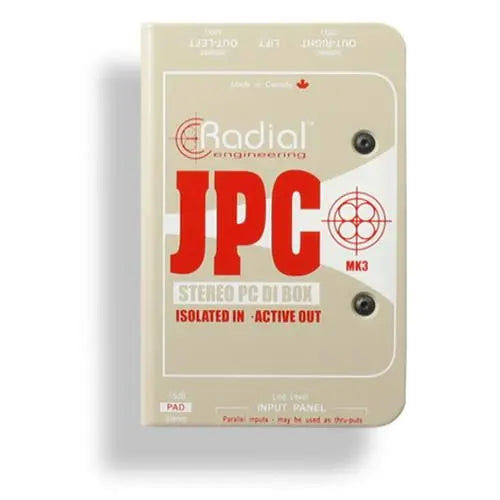
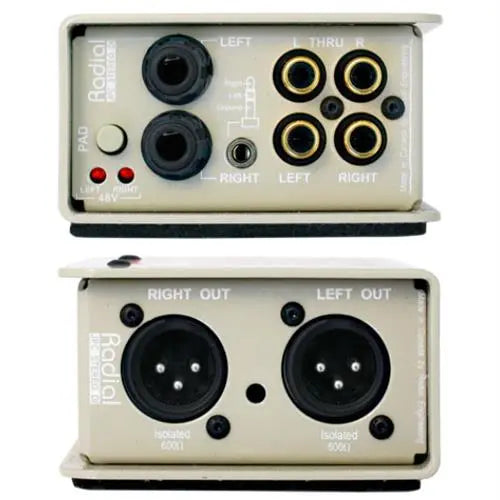
For most people the honest answer is one good active DI covers 90% of situations, and a passive one joins it later when a keyboard or an active bass turns up. Buy the channel count you need rather than the one you might need — a stereo box for a mono source is wasted, and two mono boxes for a stereo keyboard is a nuisance on stage.
Not sure which suits your instrument? Tell us what you are plugging in and where it is going, and we will tell you which box and why.
See also our cables and connectors range for the leads to go with it.
It converts a high-impedance, unbalanced instrument signal into a low-impedance, balanced signal that can travel down a long cable without picking up noise, and it isolates the instrument from the mixing desk to prevent ground-loop hum. That is why a bass plugged into a long snake through a DI arrives clean, and plugged in directly arrives thin and noisy.
A passive DI uses a transformer and needs no power. It handles hot, line-level signals without distorting, so it suits keyboards, synths, active basses and amplifier speaker outputs. An active DI contains a powered preamp with high input impedance, which suits weak high-impedance sources like passive guitar and bass pickups and piezo-equipped acoustics.
Passive bass with standard pickups — use an active DI. Bass with active onboard electronics and a battery — use a passive DI. If you switch between both instruments regularly, an active DI is the safer single purchase.
Active DI boxes do — either 48V phantom power from the mixing desk or an internal battery. Passive DI boxes need no power at all, which is one reason they are favoured on large touring rigs where fewer dependencies means fewer failures.
Often, yes. Most live hum is a ground loop between two pieces of equipment on different circuits, and the transformer isolation in a DI box or a dedicated line isolator breaks that loop. Check your cables first — a faulty lead produces similar symptoms and is cheaper to replace.
Yes, and it is standard practice. Take the guitar through a DI into your interface to capture a clean, unprocessed signal, then either use amp-simulation software or reamp it later through a real amplifier. Recording the DI alongside a miked amp gives you a second chance at the tone after the session.
Sending a previously recorded clean DI track back out of your interface, through a reamping box that restores the correct impedance and level, and into a guitar amplifier so it can be re-recorded with a microphone. It lets you change the amp tone weeks after the player has gone home.
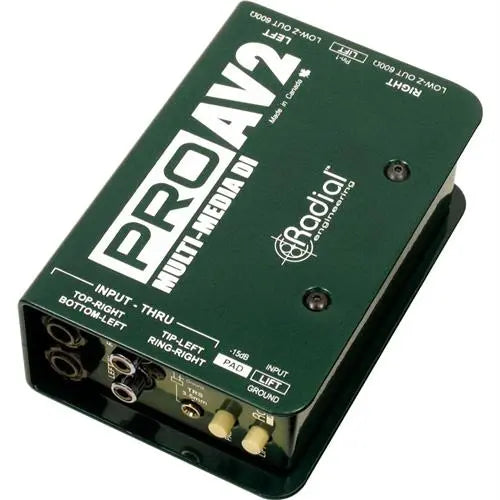
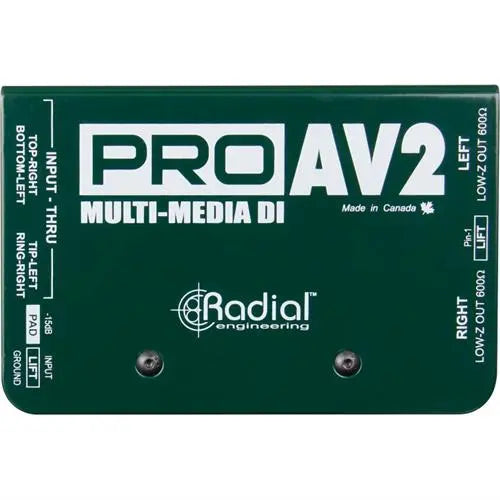
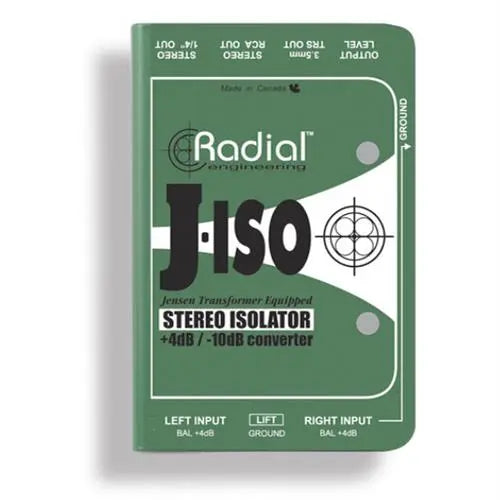
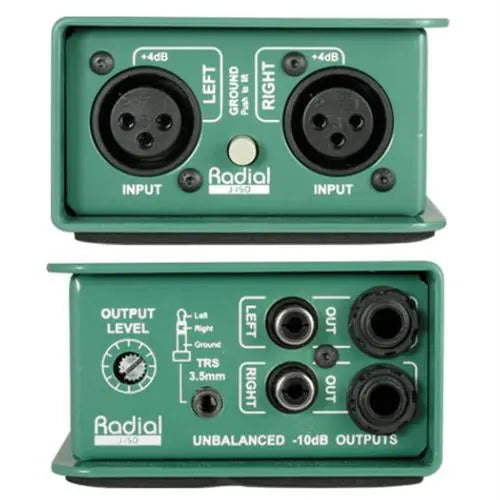
One two-channel (stereo) DI, not two mono boxes. A stereo box keeps both channels together in one unit, which is far easier to manage on stage and usually cheaper than two singles.